How to read the William the Conqueror family tree
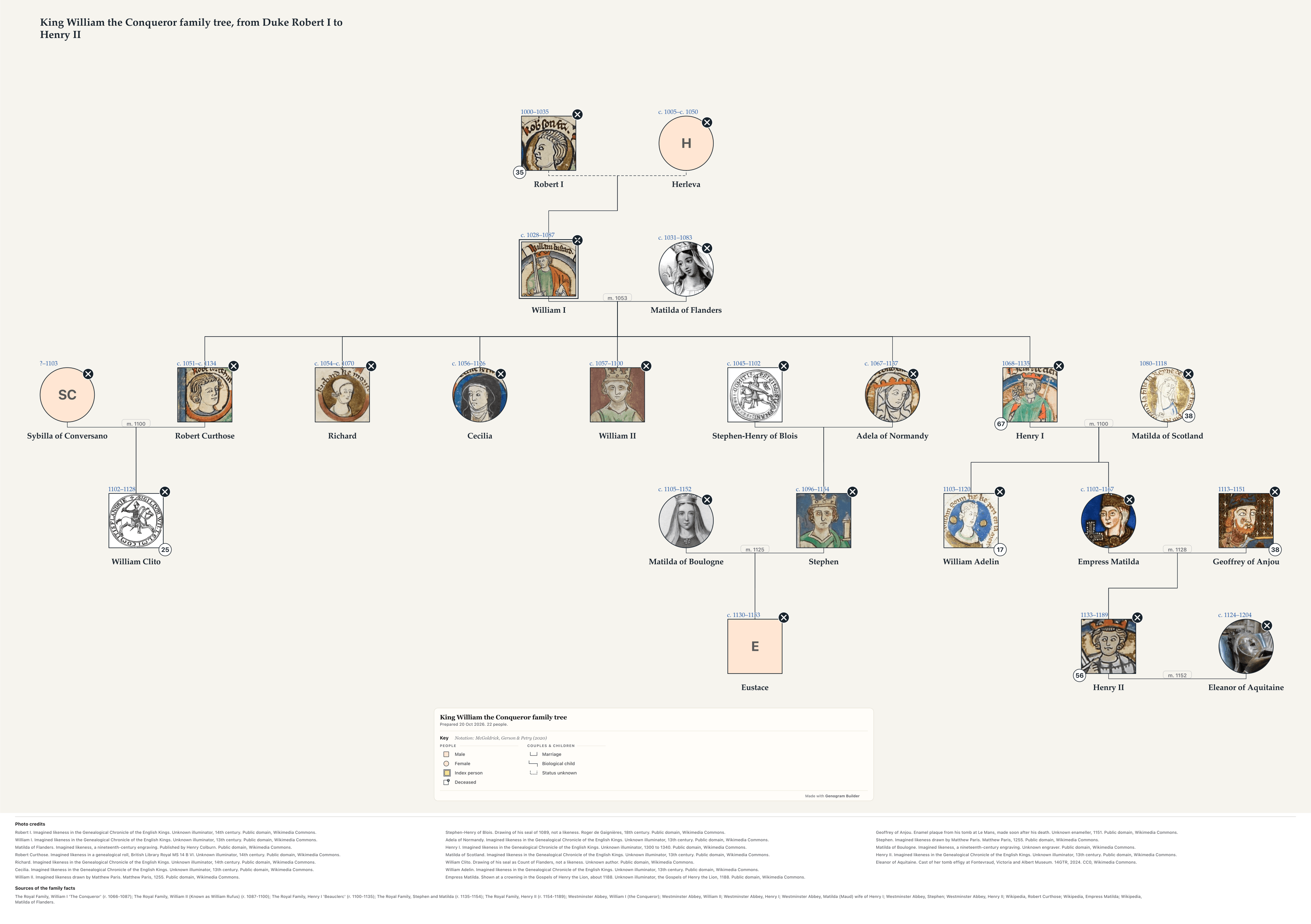
Read the King William the Conqueror family tree from the top down, one generation to a row. William has a double ring, and a double line joins each married couple.
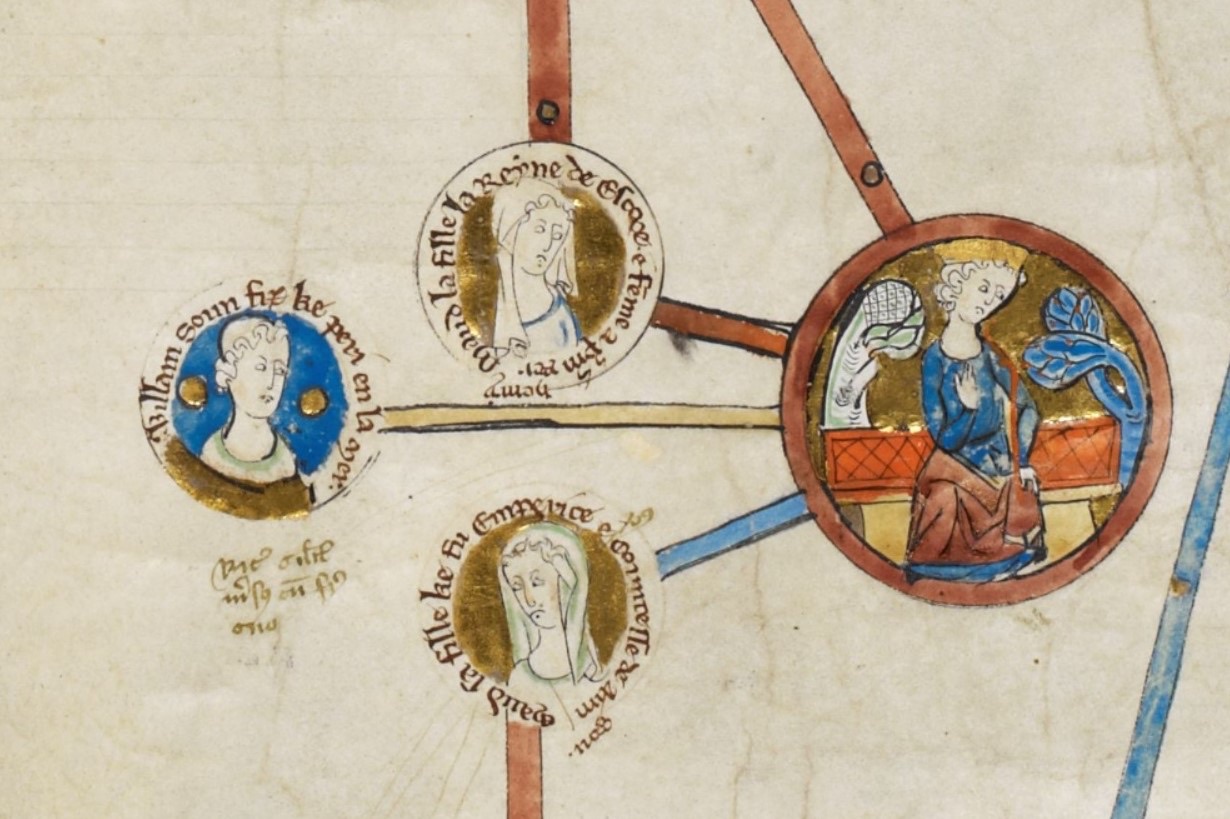
No portrait from life survives for anyone on the William the Conqueror family tree. Most pictures are roundels from the Genealogical Chronicle of the English Kings, painted between about 1280 and 1340. The oldest is the enamel from the tomb of Geoffrey of Anjou.26 A year with c. is an estimate, and the table of disagreements gives both values where sources differ.
Robert the Magnificent, Herleva and the Conquest
Robert I was Duke of Normandy from 1027 to 1035.12 His son William was born at Falaise to Herleva, the daughter of Fulbert, whom later writers called a tanner. The Royal Family dates the birth to about 1028, and Westminster Abbey to 1027.1613 Chroniclers disagree on whether Robert ever married Herleva, and his son was known as William the Bastard. In 1031 she married Herluin de Conteville.13
Robert died at Nicaea in 1035, and his family recognised the boy as heir.121 William landed at Pevensey on 28 September 1066, and on 14 October Harold was killed at Senlac, near Hastings.1 William was crowned in Westminster Abbey on Christmas Day 1066 by Ealdred, Archbishop of York.6
William and Matilda of Flanders
Matilda was the daughter of Baldwin V, Count of Flanders, and she descended from Alfred the Great.146 Westminster Abbey dates the wedding to 1053, and Wikipedia to about 1051 or 1052, at Eu.614 Matilda was crowned on 11 May 1068 and governed Normandy for her husband six times. She was buried in her abbey at Caen.14
The children on the William the Conqueror family tree
Westminster Abbey counts four sons and six daughters.6 The order of the daughters is unknown, and the sources doubt that Adeliza, Matilda and Agatha were three separate women.14 The William the Conqueror family tree draws the two daughters whose lives are best recorded, Cecilia and Adela.
| Child | Born | What became of the child |
|---|---|---|
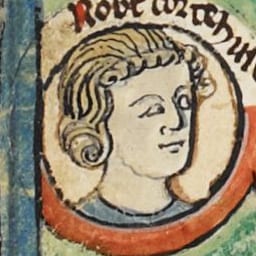 Robert Curthose | About 1051 | Duke of Normandy, later a prisoner |
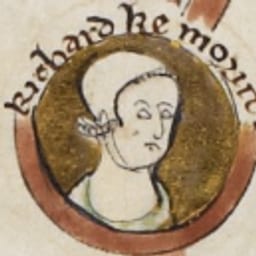 Richard | About 1054 | Killed hunting in the New Forest |
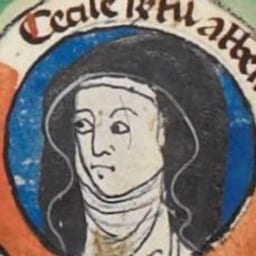 Cecilia | About 1056 | Abbess of Holy Trinity, Caen |
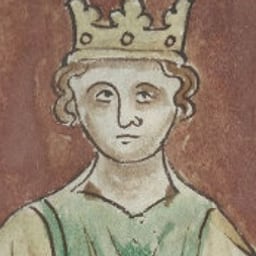 William Rufus | 1056 to 1060 | King of England from 1087 |
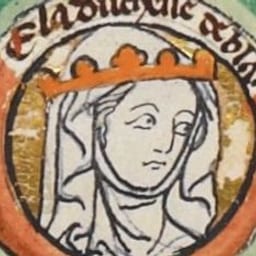 Adela | About 1067 | Mother of King Stephen |
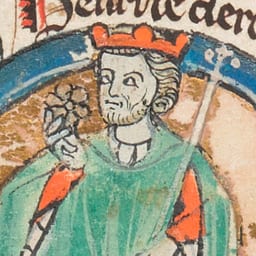 Henry I | Late 1068 | King of England from 1100 |
Three sons, one kingdom and one duchy
William died on 9 September 1087 near Rouen, after a fall from his horse in the fighting in the French Vexin.6 He left Normandy to Robert Curthose, England to William Rufus and 5,000 pounds in silver to Henry.1 In 1096 Robert pledged Normandy to Rufus to go on crusade.15 Rufus never married, and on 2 August 1100 he was killed by an arrow in the New Forest.218
Henry was crowned three days later, before Robert could return.3 At Tinchebray in 1106 he defeated Robert, who died his prisoner 28 years later.315 Robert’s son William Clito claimed Normandy until he died of a wound at Aalst in 1128.23
Henry I, the White Ship and a daughter as heir
On 11 November 1100 Henry married Matilda of Scotland in Westminster Abbey. Christened Edith, she was a granddaughter of Edmund Ironside, so the marriage joined the Norman kings to the old English royal line.9 Their daughter Matilda was born in 1102 and their son William Adelin in 1103.22
William Adelin drowned when the White Ship sank off Barfleur on 25 November 1120.24 The Royal Family names a second son, Richard, lost in the wreck, while Westminster Abbey calls William the only son.38 In 1127 Henry made the barons swear to accept Matilda as his heir.3 The widow of the emperor Henry V, she married Geoffrey of Anjou at Le Mans in 1128.25

Stephen, the empress and the war for the crown
Henry I died in Normandy on 1 December 1135.21 His nephew Stephen, the son of Adela and Stephen-Henry of Blois, hurried to London and was crowned on 22 December.410 His wife Matilda of Boulogne was a niece of Matilda of Scotland, so on the William the Conqueror family tree the two rival Matildas are first cousins.28
Stephen was captured at Lincoln in 1141, and the empress took the title Lady of the English, but she was never crowned.25 The bishops refused to crown Stephen’s son Eustace in 1152, and he died in August 1153.29 A treaty that year made the empress’s son Henry the heir. The Royal Family calls it the treaty of Wallingford, and Wikipedia the Treaty of Winchester.427
Henry II, the first Plantagenet king
Henry II was born at Le Mans in March 1133, the eldest son of the empress and Geoffrey.3011 In 1152 he married Eleanor of Aquitaine, the former Queen of France.31 Stephen died at Dover on 25 October 1154, and Henry and Eleanor were crowned in Westminster Abbey on 19 December.1011
Henry II stands at the foot of the William the Conqueror family tree as a great-grandson of William through Henry I and the empress. The name Plantagenet came from the sprig of broom his father was said to wear.26 Henry died in 1189, at war with his son Richard.5
Where the sources disagree
| Fact | One source | Another source |
|---|---|---|
| Birth of William | About 1028, the Royal Family | 1027, Westminster Abbey |
| Wedding of William and Matilda | 1053, Westminster Abbey | About 1051 or 1052, Wikipedia |
| Sons lost in the White Ship | William and Richard, the Royal Family | William alone, Westminster Abbey |
| Birth of Stephen | About 1096, Westminster Abbey | About 1092 or 1096, Wikipedia |
| Wedding of Henry II | Bordeaux, Westminster Abbey | Poitiers, Wikipedia |
Questions about the Conqueror’s family
How Henry II descended from William
On the William the Conqueror family tree the line runs from William to his son Henry I, to the empress and to Henry II, his great-grandson.
How many children William had
Westminster Abbey counts four sons and six daughters. The William the Conqueror family tree draws the four sons and two daughters.
People and sources
A page of its own lists all 22 people on the chart, each with a short note and the sources for it, and the 31 numbered sources this article cites. It also gives the credits of the portraits and this page as a reference in the APA, MLA, Chicago and Harvard styles, ready to copy.