Twins Genogram Template with Identical and Fraternal Twins
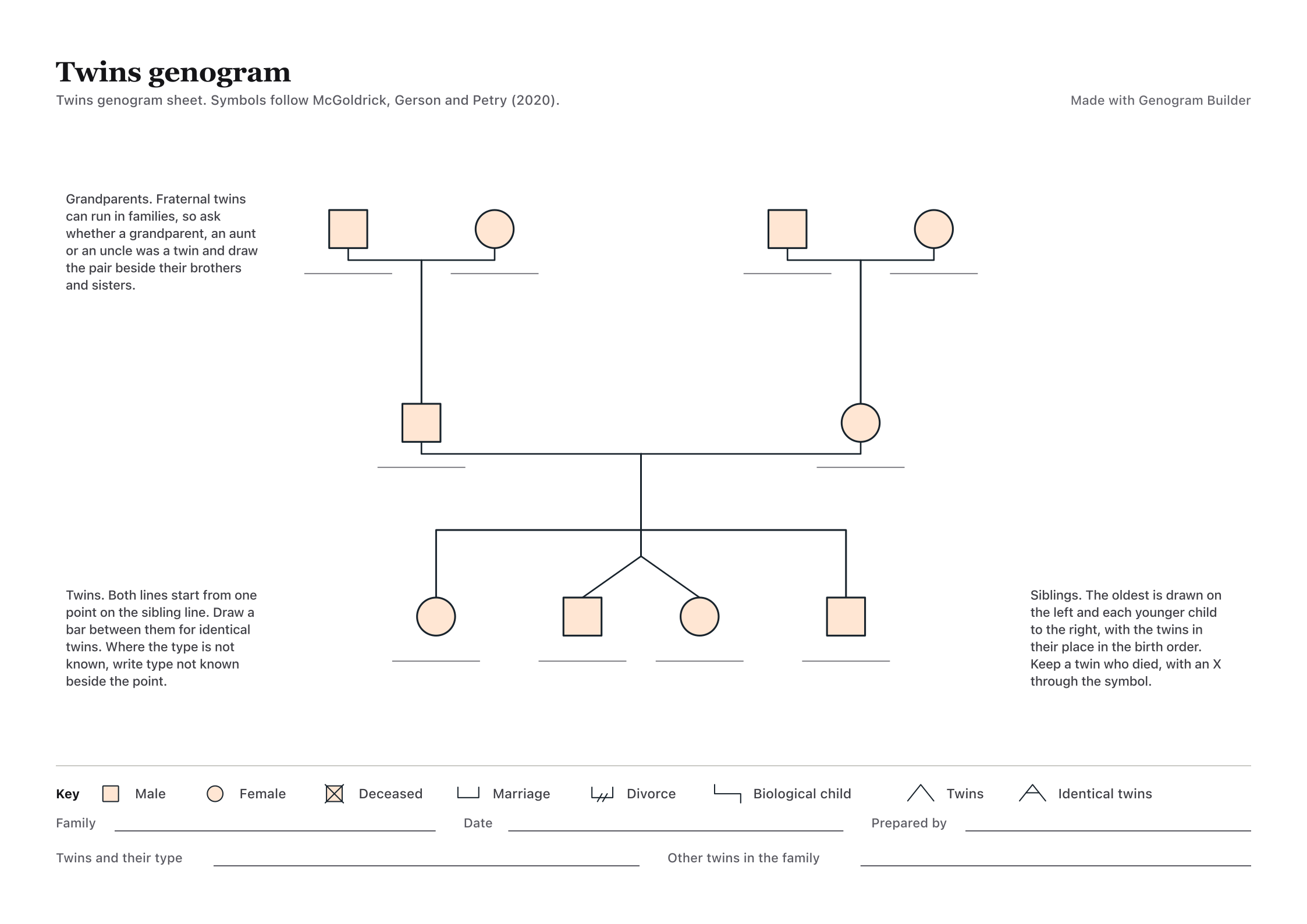
This twins genogram template draws a genogram with twins between an older and a younger brother or sister, with the parents and both sets of grandparents above them. Both twins hang from one point on the sibling line, and identical twins add a bar between the two lines. Print the blank A4 sheet, edit it online or open the filled example.
Blank sheet
Filled in for a fictional family
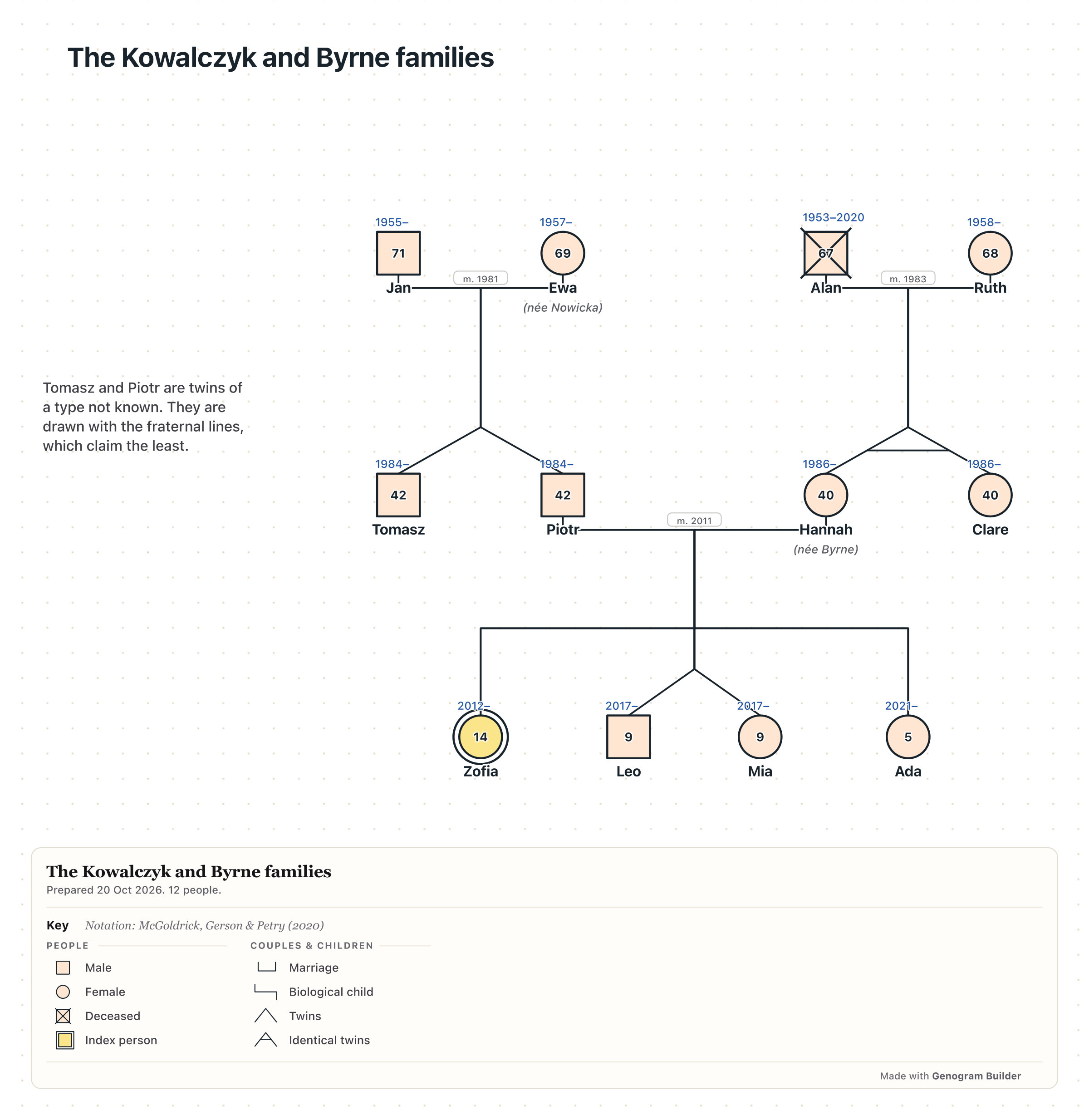
On the left is the blank sheet, with the twins drawn as fraternal. On the right is the fictional Kowalczyk family, with identical twins, fraternal twins and a pair of twins whose type was never known.
Edit the twins genogram template online
Open the blank sheet to type over the ten placeholder names, or open the Kowalczyk family and change it. Either one starts a separate chart in this tab and leaves the family saved on the homepage alone.
To add a twin, select a person who already has parents and click Add a twin in the side panel. The new twin joins the same point on the sibling line and is drawn as fraternal. Click the short line between the point and one twin to switch the pair to Identical or back to Fraternal, or click Not twins to undo it. The editor offers those two types only, so draw a pair of unknown type as fraternal and say so in a note, as the example does.
Edits stay in this tab until you continue in the full editor, which keeps the chart. A visitor can edit without an account but cannot export. A free account exports a PNG, a PDF or a JSON project, with a watermark on the picture and the PDF, and Pro removes the watermark and adds SVG.
The sheet puts the twins in their place among their siblings
The drawing has both sets of grandparents, the two parents and four children. The oldest stands on the left, the twins come next and the youngest stands on the right, so the birth order reads from left to right as on any genogram. The twins hang from a single point on the sibling line, which is how the notation shows that two children were born together.
Notes beside the drawing say where to draw the bar for identical twins, what to write when the type is not known and how to keep a twin who died. The key names the lines for twins and for identical twins, and the fields take the twins with their type and any other twins in the family.
Identical, fraternal and unknown twins are drawn in three ways
McGoldrick, Gerson and Petry (2020) draw all twins from one point on the sibling line and add a short bar between the lines of identical twins. Triplets and other multiple births follow the same rule, with three or more lines from the point.
| Twins | How they are drawn | What to write |
|---|---|---|
| Fraternal twins | Two lines from one point, with no bar | The shared year of birth above each symbol |
| Identical twins | Two lines from one point, joined by a short bar | How the type is known, such as a DNA test, where it matters |
| Twins of unknown type | Two lines from one point, with no bar | Type not known, beside the point or in a note |
| A twin who died | The same lines, with an X through the symbol | The year of death, and the age if the twin died young |
| Triplets | Three lines from one point, with a bar between any identical pair | The year of birth above each symbol |
A boy and a girl born together are almost always fraternal twins, since identical twins come from one fertilised egg. Where two sisters or two brothers have never been tested, leave the type open rather than guess it from how alike they look.
Ask about twins in every generation before drawing
Twins turn up more than once in many families, so ask about them in each generation and draw every pair where it belongs.
- Grandparents. Ask whether a grandparent was a twin, and add the twin beside them with their own parents above if the chart needs them.
- Parents, aunts and uncles. Ask the same of the parents and their brothers and sisters, and draw each pair from its own point.
- The children. Write each name on the line under the symbol and the year of birth above it. Twins share the year, and a note can say which twin was born first.
- The type. Draw the bar only where the family knows that the twins are identical, and write type not known where nobody knows.
- Losses. Keep a twin who died at birth or later, with an X through the symbol, because the surviving twin often counts that loss as part of the family story.
Fraternal twins can run in families on the mother’s side, while identical twins are not thought to be inherited. That is one reason a nurse or a genetic counselor asks about twins when taking a family history, and the guide to the genogram in nursing covers the health side of the chart.
The fictional Kowalczyk family has all three kinds of twins
Zofia Kowalczyk, born in 2012, is the index person, and she drew the chart for a school science project on inherited traits. Her mother Hannah and her aunt Clare are identical twins born in 1986, which a DNA test confirmed in 2019, so a bar joins their lines.
Her father Piotr and his brother Tomasz were born in 1984, twenty minutes apart. The family never learned whether they are identical, so they are drawn with the fraternal lines, which claim the least, and a note beside them says that the type is not known. Zofia’s brother Leo and her sister Mia were born together in 2017 as fraternal twins, between Zofia and their youngest sister Ada.
Hannah is an identical twin and later had fraternal twins, and the chart lets a reader see both facts without claiming that one caused the other. More completed charts are collected in the genogram examples.
Draw twins with the rest of the sibling group
Twins hang from the same couple as their full brothers and sisters. A half sibling hangs from a different couple line that shares one parent, as the guide on how to show half siblings on a genogram explains. Twins separated by adoption keep their single point on the birth family’s sibling line, and each is joined to an adoptive family by the lines of adoption, as on the adoption genogram template.
The genogram symbols reference shows the lines for twins beside every other mark, and the article on showing twins in the editor goes through the steps with the side panel open.
Common questions
The twins genogram template is free to print and edit
The blank PDF and PNG download without an account, and the sheet can be edited online as a guest. Exporting an edited chart needs a free account, and the free export carries a watermark.
How to show triplets on a genogram
Draw three lines from one point on the sibling line. Where two of the three are identical, put the bar between those two lines only.
How to show twins whose type is not known
Draw them with two lines from one point and no bar, and write type not known beside the point. The editor draws such a pair as fraternal, so add the words in a note.
Whether twins always share a year of birth
Nearly always. Twins born either side of midnight on the last night of the year are the exception, so write full dates wherever the order of birth matters.