How to read this Tudor family tree
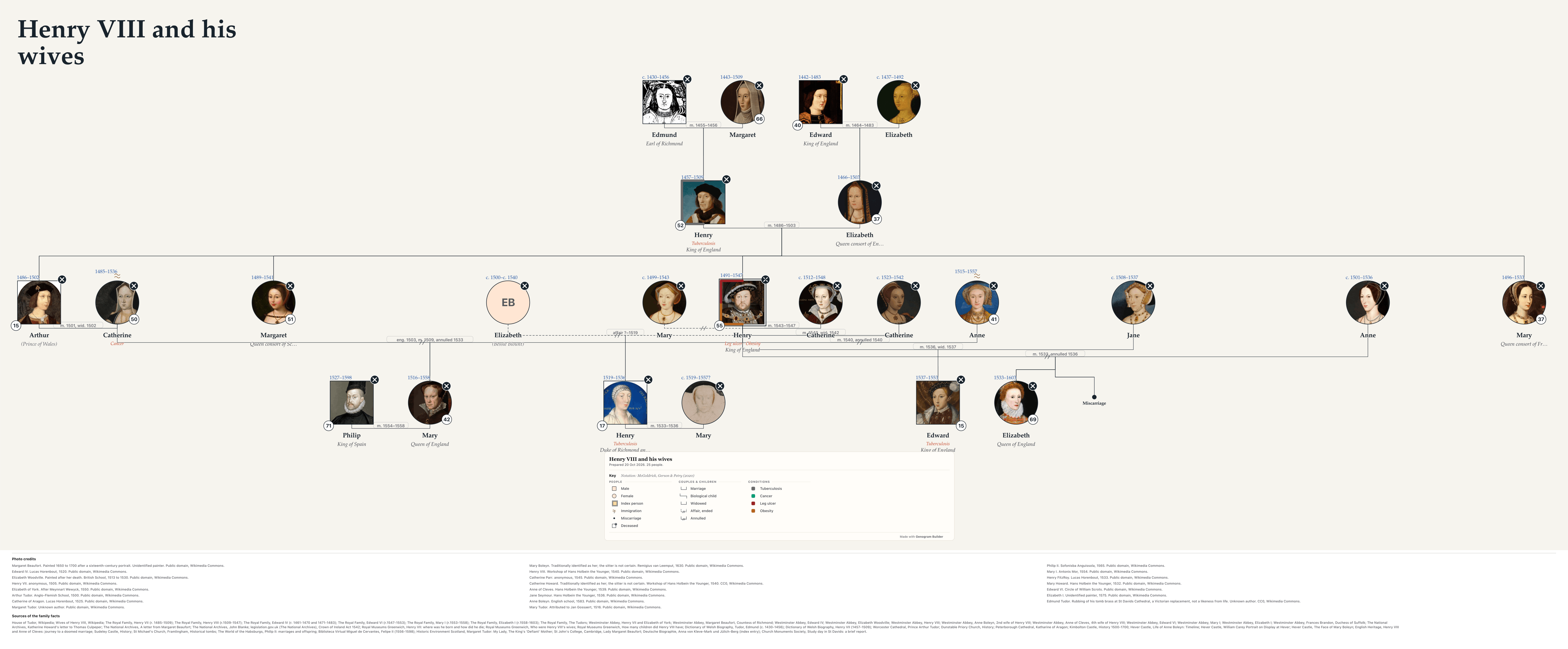
Read the chart from the top down, one generation to a row, with children hanging from the union of their parents. The key under the chart lists every mark.
A portrait is a person
Initials stand in for a portrait that is not known.
The plate names the person
It gives the years, with a dagger before the year of death, and the title.
A double ring is the centre
Henry VIII is the centre, with his earlier partners to his left.
Numbers count the marriages
The circled numbers beside Henry VIII give the order of his six marriages.
Two strokes mark an annulment
Three of the six marriages were annulled.
A dashed line is no marriage
Elizabeth Blount and Mary Boleyn were mistresses of the king.
Who the chart leaves out, and why
The chart draws one king’s household. Henry VIII alone has eight partners on its third row, and more people would crowd it.
| Person | Who | Why not drawn |
|---|---|---|
| Owen Tudor and Catherine of Valois | Grandparents of Henry VII | The chart starts a generation later. |
| Edward III and the Beauforts | Source of the Tudor claim | Four generations further back. |
| Edward V | Brother of Elizabeth of York | He vanished as a boy. |
| Four children of Henry VII | They died young | Only those who lived are drawn. |
| James IV and Charles Brandon | Husbands of the king’s sisters | Outside his household. |
| Lady Jane Grey | Great-granddaughter of Henry VII | Two generations further down. |
| Mary, Queen of Scots, and James VI | The Scottish heirs | Drawn in the second diagram. |
| Other husbands | Of Margaret Beaufort and Catherine Parr | Only the Tudor marriage is drawn. |
| Three wives of Philip II | He married four times | Only Mary I belongs here. |
The Tudor monarchs in order
The Royal Family counts five Tudor sovereigns, or six with Lady Jane Grey, over 118 years.1 The last column shows how the crown passed.
| Monarch | Reign began | Crowned | Died | Age | Reign | How the crown passed on |
|---|---|---|---|---|---|---|
| Henry VII | 22 August 1485 | 30 October 1485 | 21 April 1509, Richmond | 52 | 23 years, 8 months | To his only surviving son. |
| Henry VIII | April 1509 | 24 June 1509 | 28 January 1547, Whitehall | 55 | 37 years, 9 months | To Edward, by birth and by the act of 1544. |
| Edward VI | 28 January 1547 | 20 February 1547 | 6 July 1553, Greenwich | 15 | 6 years, 5 months | To Jane Grey by his devise, against the act. |
| Jane | 10 July 1553 | Never crowned | Deposed 19 July 1553, beheaded 12 February 1554 | 16 or 17 | 9 days | To Mary, proclaimed by the council. |
| Mary I | 19 July 1553 | 1 October 1553 | 17 November 1558, St James’s Palace | 42 | 5 years, 4 months | To Elizabeth, under the act of 1544. |
| Elizabeth I | 17 November 1558 | 15 January 1559 | 24 March 1603, Richmond | 69 | 44 years, 4 months | To James VI of Scotland. |
A thin claim and a won battle
Henry Tudor was born at Pembroke Castle on 28 January 1457 to a mother of thirteen, Margaret Beaufort. His father, Edmund Tudor, had died of plague in captivity at Carmarthen months before.9361033 Edmund was a son of Owen Tudor and Catherine of Valois, the widow of Henry V, and so a half-brother of Henry VI.1136
The claim came through Margaret. She descended from John of Gaunt, a son of Edward III, through one of his children born outside marriage.10 The Beauforts were later made legitimate, and in 1407 Henry IV confirmed this with words that barred them from the crown.5657
The descent from Edward III
- Lancaster
- Beaufort
- York
- Tudor
- A monarch of England
- A marriage
The stronger claim belonged to Elizabeth of York, eldest daughter of Edward IV.2 After Edward IV died in 1483, his son Edward V was deposed, Richard III was crowned and the princes vanished in the Tower.1426 Henry, in exile in Brittany since 1471, promised to marry Elizabeth and won Yorkists who had turned against Richard.33257
He landed near Milford Haven on 7 August 1485, and at Bosworth on 22 August Sir William Stanley’s men joined Henry and Richard was killed.26 Henry was crowned on 30 October and married Elizabeth on 18 January 1486, uniting Lancaster and York.937 Parliament repealed Titulus Regius, the act that had declared her illegitimate.58 The Tudor rose joins the red rose of Lancaster to the white of York.33
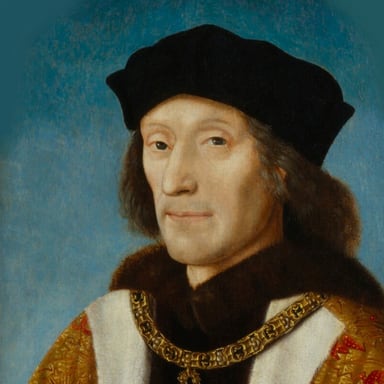
Henry VII, who founded the line
Henry VIIreigned 1485 to 1509
- Born
- 28 January 1457, Pembroke Castle
- Crowned
- 30 October 1485, Westminster Abbey
- Married
- Elizabeth of York, 18 January 1486
- Died
- 21 April 1509, Richmond Palace
- Heir
- Henry, his second son
Pretenders such as Lambert Simnel and Perkin Warbeck troubled the first years. Henry founded the Yeomen of the Guard in 1485, and royal income rose from about £52,000 a year to £142,000.2
Arthur married Catherine of Aragon and died in 1502, aged fifteen.443 Margaret married James IV of Scotland in 1503 under the Treaty of Perpetual Peace.4260 Elizabeth of York died in the Tower on her birthday in 1503, after a birth, and four of her eight children outlived childhood.933 Henry died at Richmond in 1509 and lies beside her at Westminster Abbey.933
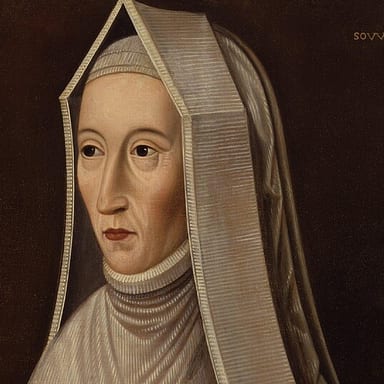 Margaret BeaufortMother of the king.
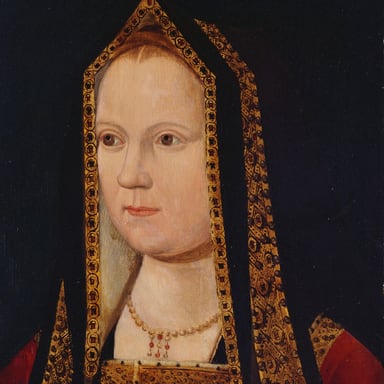 Elizabeth of YorkQueen from 1486.
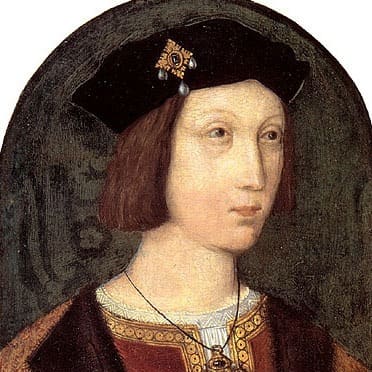 Arthur, Prince of WalesHeir until 1502.
Henry VIII and the search for a son
Henry VIIIreigned 1509 to 1547
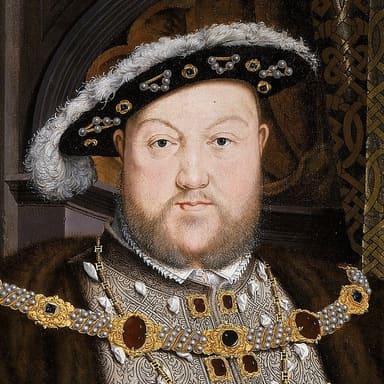
- Born
- 28 June 1491, Greenwich
- Crowned
- 24 June 1509, Westminster Abbey
- Married
- Six times, 1509 to 1543
- Died
- 28 January 1547, Whitehall
- Heir
- Edward, his son by Jane Seymour
Henry VIII, the second son, became heir when Arthur died and succeeded in April 1509, aged seventeen.315 In June he married his brother’s widow under a papal licence, and the two were crowned together.153
By the late 1520s the marriage had one living child, Mary, and the king had acknowledged a son, Henry FitzRoy, by Elizabeth Blount.335 Henry claimed that the marriage had never been lawful, Wolsey failed to win the pope’s agreement in 1529, and Thomas Cromwell turned to Parliament.3 Cranmer declared the marriage void on 23 May 1533, and the Act of Supremacy of 1534 declared the king supreme head of the Church of England.4527
Anne Boleyn bore Elizabeth and was beheaded in 1536. Jane Seymour bore Edward and died twelve days later.347 Henry died at Whitehall on 28 January 1547 and was buried at Windsor beside Jane.2815
The six marriages of Henry VIII
Schoolchildren learn “Divorced, beheaded, died; divorced, beheaded, survived”. In law none ended in divorce, and three marriages were annulled, declared never to have been valid.343
| Wife | Married | Ended | How it ended | Child who lived |
|---|---|---|---|---|
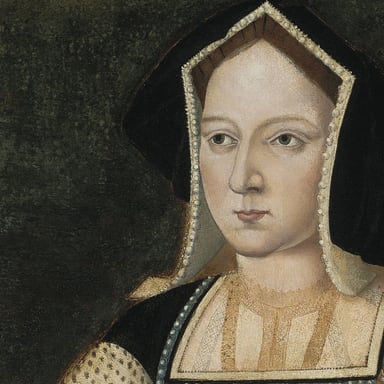 Catherine of Aragon | 11 June 1509 | 23 May 1533 | Declared void by Cranmer at Dunstable | Mary I, 1516 |
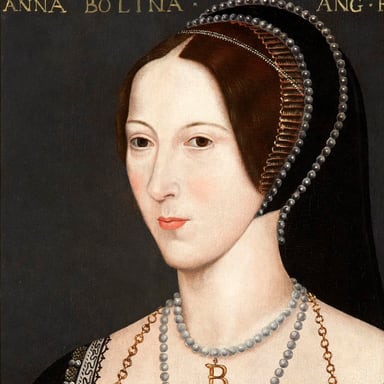 Anne Boleyn | 25 January 1533 | 17 May 1536 | Declared void before her execution | Elizabeth I, 1533 |
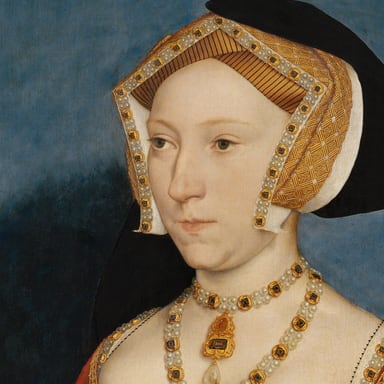 Jane Seymour | 30 May 1536 | 24 October 1537 | Her death after the birth of her son | Edward VI, 1537 |
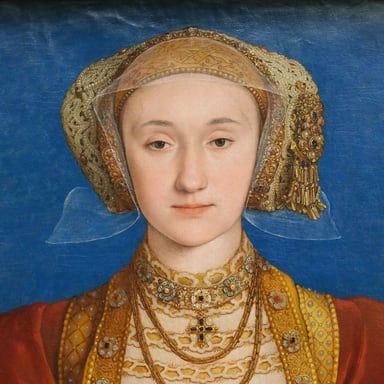 Anne of Cleves | 6 January 1540 | July 1540 | Annulled as never consummated | None |
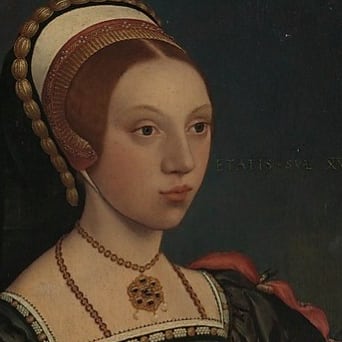 Catherine Howard | 28 July 1540 | 13 February 1542 | Her execution in the Tower | None |
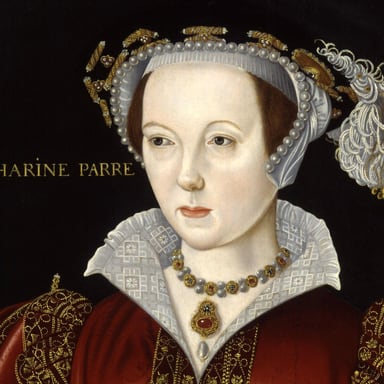 Catherine Parr | 12 July 1543 | 28 January 1547 | The death of the king | None |
Anne of Cleves accepted the annulment and lived on in England as the king’s sister.49 Catherine Parr governed as regent while he was in France and later married Thomas Seymour.50
Three acts, a will and a devise
Each marriage changed the heir, and each change was written into law.
1534
The First Act of Succession
Dated 1533 in some records
- Mary was declared illegitimate and removed from the succession.
- Subjects swore an oath that recognised the children of Anne Boleyn as the lawful heirs.
1536
The Second Act of Succession
After Anne Boleyn’s fall
- Elizabeth was removed as well, so neither daughter stood in the succession.
- The king might name his successor by letters patent or by his will.
1544
The Third Act of Succession
The order that held
- Mary and Elizabeth returned to the succession after Edward and his children.
- Neither was declared legitimate.
30 December 1546
The will of Henry VIII
A month before his death
- It confirmed the order Edward, Mary and Elizabeth, and after them the Grey and Suffolk families.
- It passed over the Scottish heirs of his elder sister Margaret.
21 June 1553
The devise of Edward VI
Letters patent
- Edward wrote it in his own hand, and the manuscript is kept in the Inner Temple Library.
- Changed from a draft that named only male heirs, it let Lady Jane Grey reign and excluded both of his sisters.
Edward VI, a king at nine
Edward VIreigned 1547 to 1553
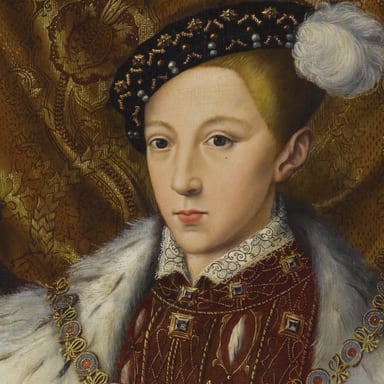
- Born
- 12 October 1537, Hampton Court Palace
- Crowned
- 20 February 1547, Westminster Abbey
- Married
- Never
- Died
- 6 July 1553, Greenwich Palace
- Heir
- Jane by his devise, Mary by statute
Edward VI was nine, and his uncle Edward Seymour, Duke of Somerset, governed as Protector until John Dudley, Duke of Northumberland, overthrew him. Somerset was executed in 1552.184 The Prayer Book of 1549 brought services in English.184 Edward died of tuberculosis at Greenwich in his sixteenth year.1839
Lady Jane Grey, queen for nine days
Jane is not on the chart. Her mother, Frances Brandon, was the daughter of Mary Tudor, the younger sister of Henry VIII.24 Jane married Guildford Dudley, a son of Northumberland, in May 1553.3964 The council recognised her as queen on 10 July, and she was deposed on 19 July.5 After her father joined Wyatt’s rebellion against Mary, she was beheaded on 12 February 1554, aged sixteen or seventeen.245264
Mary I, the first queen to rule
Mary Ireigned 1553 to 1558
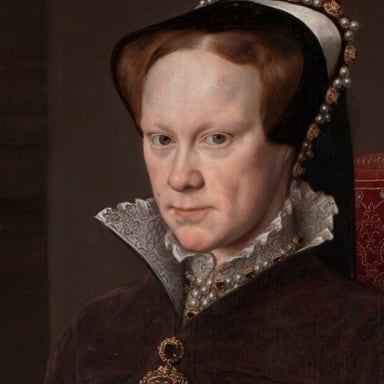
- Born
- 18 February 1516, Greenwich Palace
- Crowned
- 1 October 1553, Westminster Abbey
- Married
- Philip of Spain, 25 July 1554
- Died
- 17 November 1558
- Heir
- Elizabeth, her half-sister
Sources19
Mary I was the first queen regnant of England, a queen who ruled in her own right.6 She restored papal supremacy, and around three hundred Protestants were burnt in three years.6 She married Philip of Spain in Winchester Cathedral, the marriage had no child, and Calais fell to the French in 1558.196 Elizabeth was held in the Tower in 1554 under suspicion over Wyatt’s rebellion.52
Elizabeth I, the last of the line
Elizabeth Ireigned 1558 to 1603
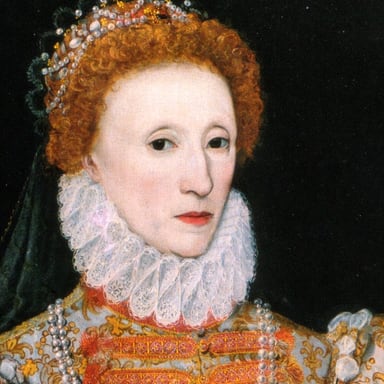
- Born
- 7 September 1533, Greenwich
- Crowned
- 15 January 1559, Westminster Abbey
- Married
- Never
- Died
- 24 March 1603, Richmond Palace
- Heir
- James VI of Scotland
Elizabeth I was two when her mother was executed.747 Her church settlement was laid down in the Thirty-nine Articles of 1563.7 After smallpox nearly killed her in 1562, Parliament petitioned her to marry. She never did, and she refused to name an heir until, on her deathbed, she drew a circlet above her head to assent to the King of Scots.3031
Mary, Queen of Scots, a great-granddaughter of Henry VII, fled to England in 1568 and was executed in 1587.2178 Elizabeth died at Richmond on 24 March 1603. In 1606 her coffin was laid on her half-sister’s at Westminster Abbey.20
The end of the line and the Stuart succession
No child of Henry VIII left a child, so in 1603 the crown passed to the line of his sisters.
The three lines from Henry VII
- Tudor
- The Scottish line
- The Suffolk line
- A monarch of England
- A marriage
A timeline of the Tudor succession
Henry Tudor is born
At Pembroke Castle.
Bosworth
Richard III is killed.
Henry VIII succeeds
He marries Catherine of Aragon in June.
The first marriage is void
Cranmer gives judgment at Dunstable.
Elizabeth is born
The act of 1534 makes her heir.
Anne Boleyn is beheaded
The act of 1536 sets both daughters aside.
Edward is born
Jane Seymour dies twelve days later.
Henry VIII dies
Edward VI is king at nine.
Edward VI dies
Jane reigns from 10 to 19 July.
Mary I dies
Elizabeth succeeds under the act of 1544.
Elizabeth I dies
James VI of Scotland succeeds.
A short glossary
- Annulment
A judgment that a marriage had never been lawful, unlike a divorce, which ends a valid one.
Sources3
- Attainder
An act of Parliament that condemned named people without a trial and kept their property from their heirs.
Sources54
- Dispensation
A papal licence to set aside a rule of church law, as Henry had to marry his brother’s widow.
- Heir apparent
An heir whose place no later birth can take. An heir presumptive would give way to one.
Sources55
- Letters patent
An open letter under the Great Seal, by which the Crown made grants and appointments.
Sources32
- Lord Protector
The man who governed for a king too young to rule, as Somerset did for Edward VI.
Sources18
- Queen consort
The wife of a reigning king. A queen regnant, such as Mary I, rules in her own right.
Sources25
Questions about the Tudor family tree
The Tudor monarchs in order
Henry VII reigned from 1485, Henry VIII from 1509, Edward VI from 1547, Mary I from 1553 and Elizabeth I from 1558 to 1603. Lady Jane Grey held the crown for nine days in July 1553.
How Henry VII was related to the kings before him
His mother descended from Edward III through John of Gaunt, and his father was a half-brother of Henry VI. He married Elizabeth of York, who had the stronger claim.
Whether the Tudor line continued
The line of Henry VIII ended in 1603. The line of his elder sister Margaret continued through James VI of Scotland, who became James I of England.
How to use this chart in a class
The PNG and the PDF carry the chart and every portrait credit, and the people table lists who was alive in each reign. A free account opens the chart in the full editor.
People and sources
A page of its own lists all 24 people on the chart, each with a short note and the sources for it, and the 66 numbered sources this article cites. It also gives the credits of the portraits and this page as a reference in the APA, MLA, Chicago and Harvard styles, ready to copy.