DynastyBritain, Germany, Russia, Spain
Queen Victoria and the royal disease
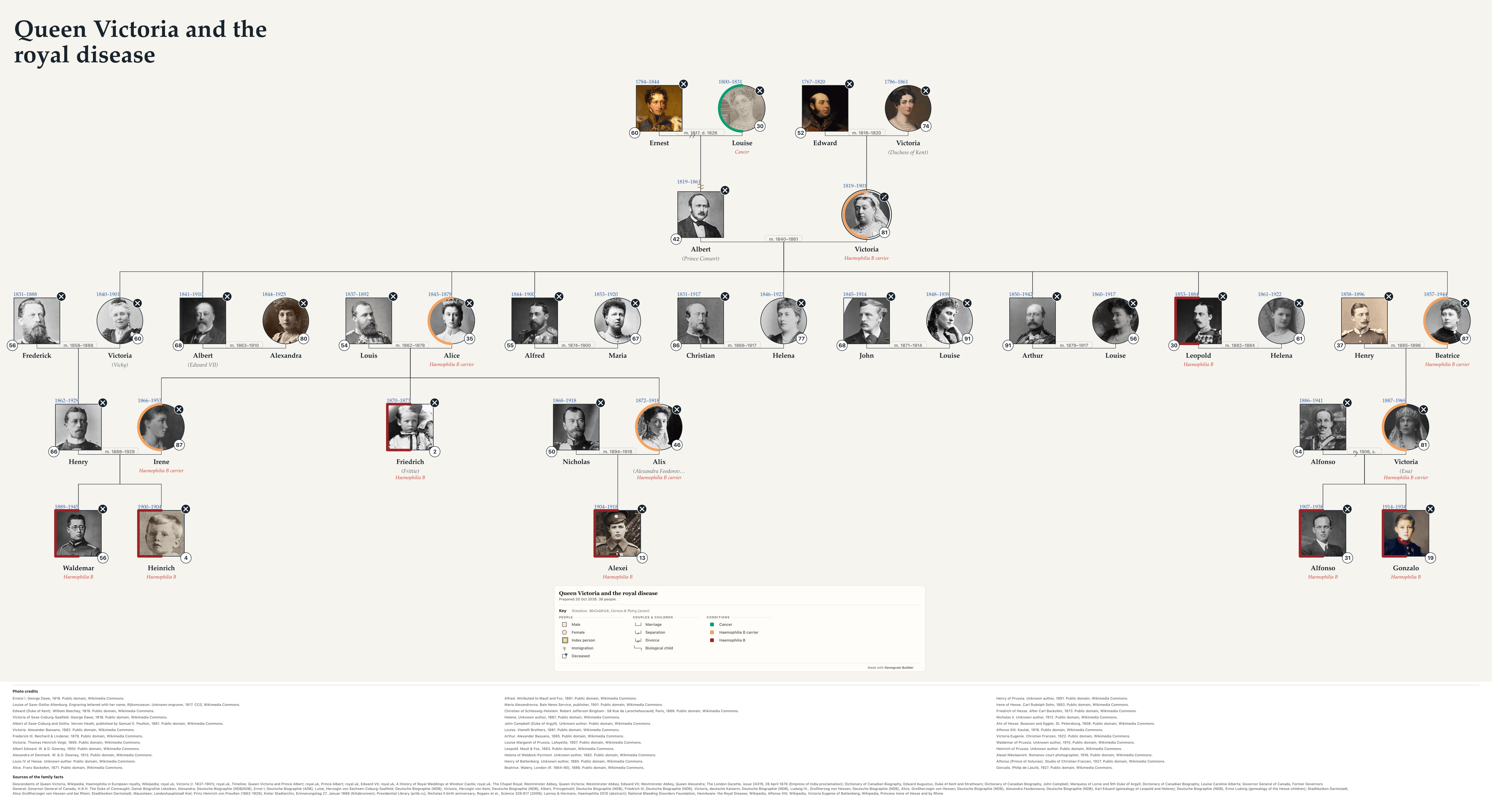
Haemophilia B passing from Queen Victoria through two daughters into the royal houses of Prussia, Russia and Spain.
- People
- 36
- Generations
- 5
- Marriages
- 15
- Conditions
- 3
- Lines
- 5
- Portraits
- All 36
- Years
- 1767–1969, from the first birth to the last death
- Conditions
- Cancer, Haemophilia B and Haemophilia B carrier
- Lines
- Cutoff repaired, Cutoff, Close, Focused on negatively and 1 more
- Event cards
- 14, from 1837 to 1918
Free accountThe family opens in the editor with its portraits, and as a template with its relationship lines, its conditions and its notes, with a free account.
Intake notes for Queen Victoria and the royal disease
Paste these notes into the AI assistant to rebuild the family.
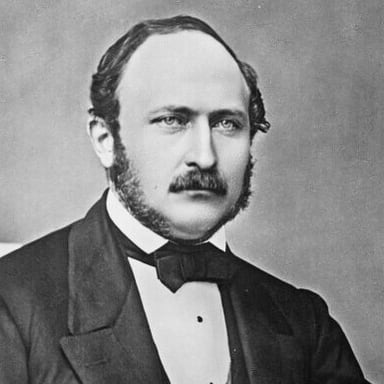
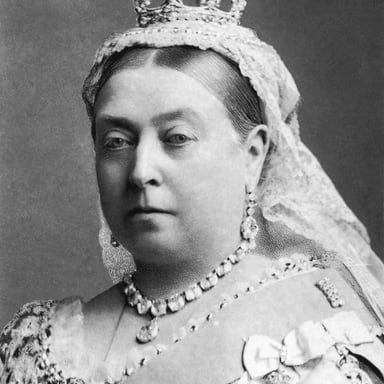
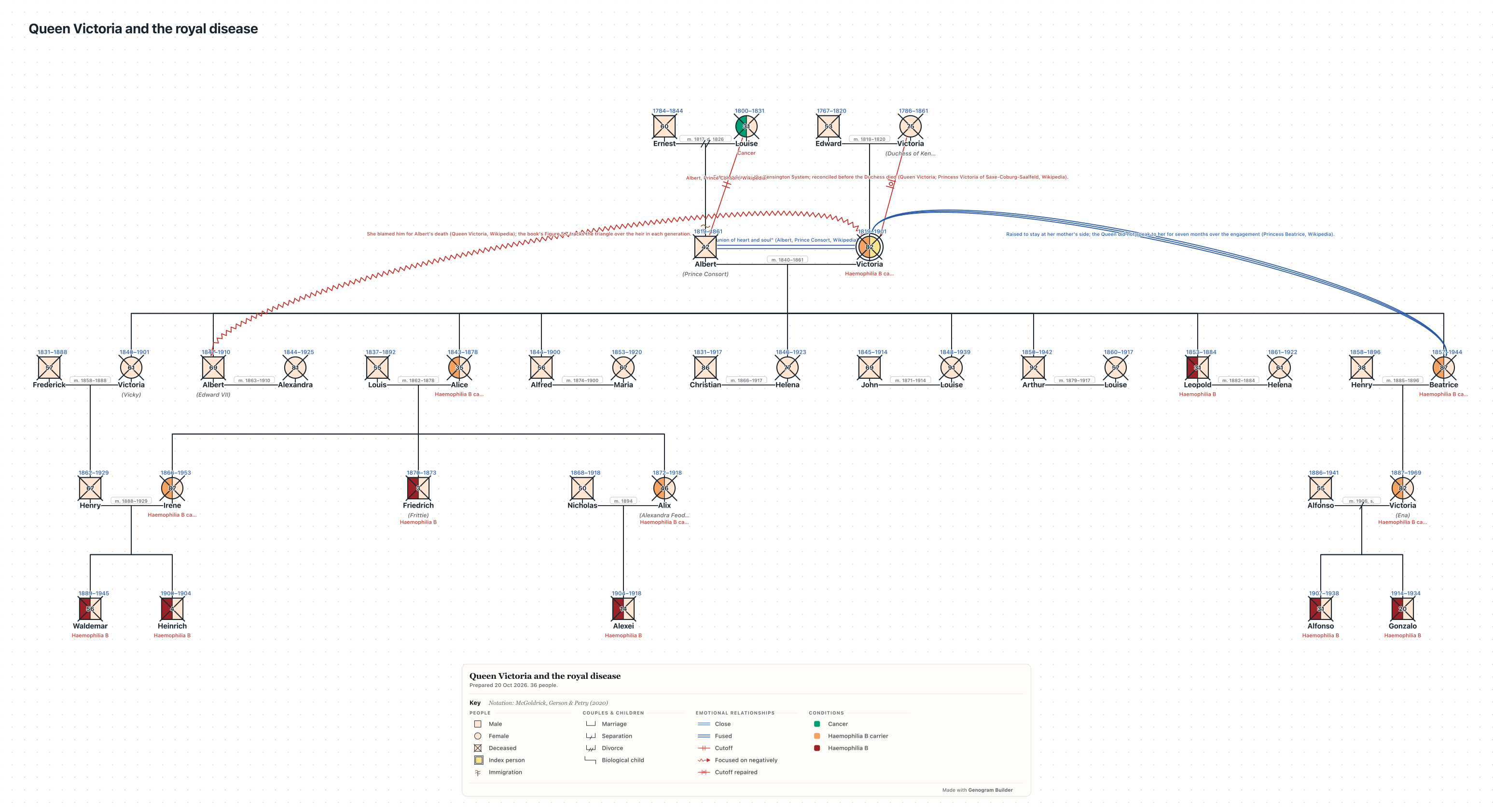
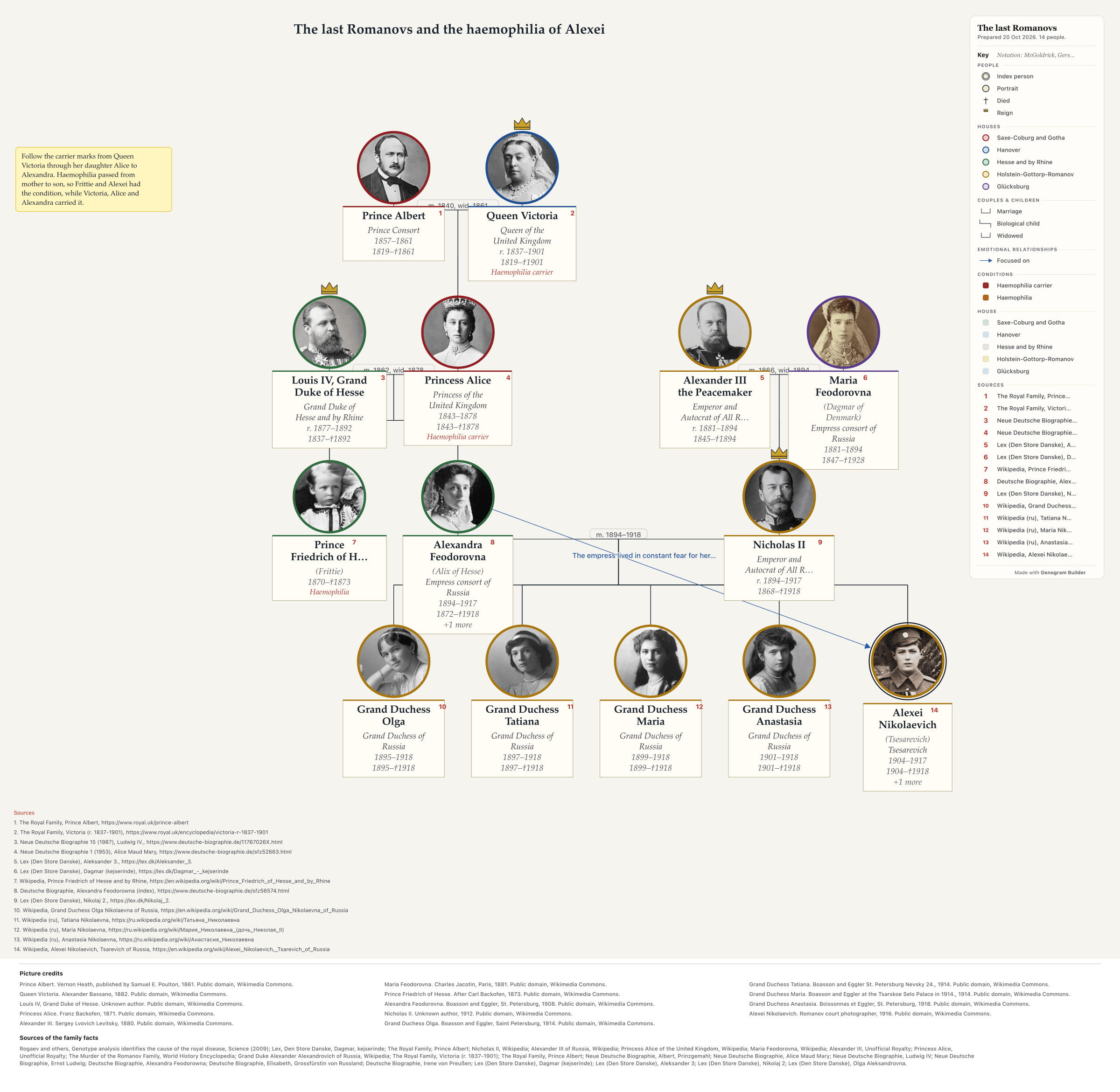
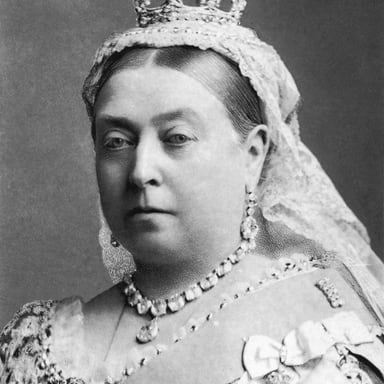
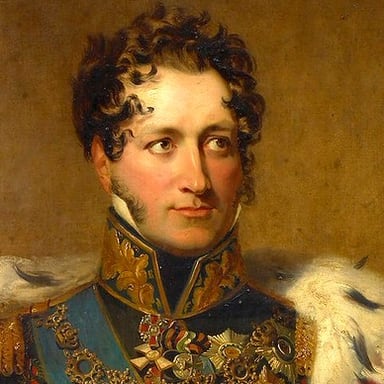
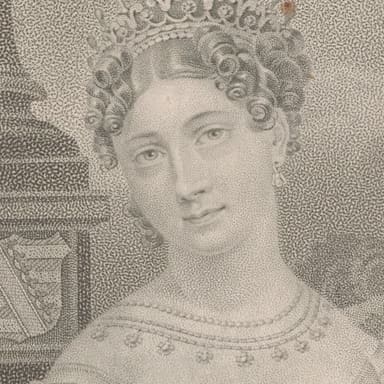
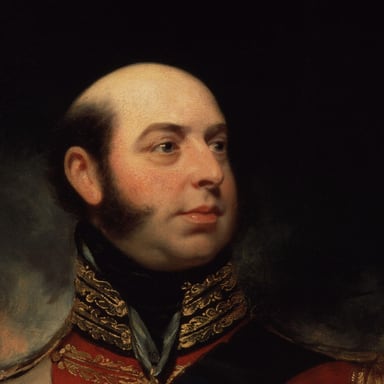
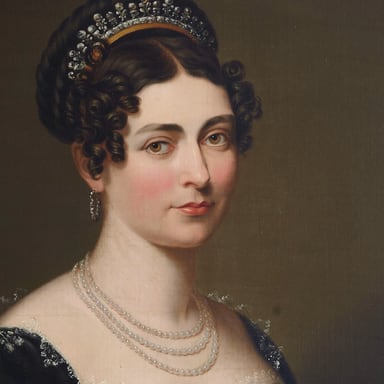
Victoria (1819–1901), Queen of the United Kingdom, is the index person and a haemophilia B carrier, probably through a new mutation. Her parents were Edward, Duke of Kent (1767–1820), who died of pneumonia, and Victoria of Saxe-Coburg-Saalfeld, Duchess of Kent (1786–1861), married in 1818 and parted by his death in 1820. Victoria and her mother were estranged in her youth and reconciled later, a cutoff repaired. In 1840 she married her first cousin Albert of Saxe-Coburg and Gotha (1819–1861), later the Prince Consort, son of Ernest I (1784–1844) and Louise of Saxe-Gotha-Altenburg (1800–1831), who married in 1817 and divorced in 1826; Louise was cut off from Albert after her exile and died of cancer. Victoria and Albert were close until he died of typhoid fever in 1861, and she wore mourning for the rest of her life. She blamed their eldest son for his death and focused on him negatively.
Their nine children married as follows. Victoria, called Vicky (1840–1901), married Frederick III (1831–1888) in 1858. Albert Edward, later Edward VII (1841–1910), married Alexandra of Denmark (1844–1925) in 1863. Alice (1843–1878), a carrier who died of diphtheria, married Louis IV of Hesse (1837–1892) in 1862. Alfred (1844–1900) married Maria Alexandrovna (1853–1920) in 1874. Helena (1846–1923) married Christian of Schleswig-Holstein (1831–1917) in 1866. Louise (1848–1939) married John Campbell, later Duke of Argyll (1845–1914), in 1871. Arthur (1850–1942) married Louise Margaret of Prussia (1860–1917) in 1879. Leopold (1853–1884) had haemophilia B, married Helena of Waldeck-Pyrmont (1861–1922) in 1882 and died after a fall in 1884. Beatrice (1857–1944), a carrier, married Henry of Battenberg (1858–1896) in 1885; he died of malaria in 1896. Each of these marriages ended with a spouse's death. The Queen was fused with Beatrice, who with Henry lived in her household from 1885 until the Queen's death.
Haemophilia B is carried on the X chromosome: each son of a carrier has an even chance of being affected and each daughter an even chance of being a carrier, so the disease travelled through Alice and Beatrice and their daughters into three royal houses. Prussia: Vicky's son Henry of Prussia (1862–1929) married his first cousin Irene of Hesse (1866–1953), Alice's daughter and a carrier, in 1888, joining two of the Queen's grandchildren; their sons Waldemar (1889–1945) and Heinrich (1900–1904) had haemophilia B. Alice's son Friedrich, called Frittie (1870–1873), had haemophilia B and died after a fall from a window.
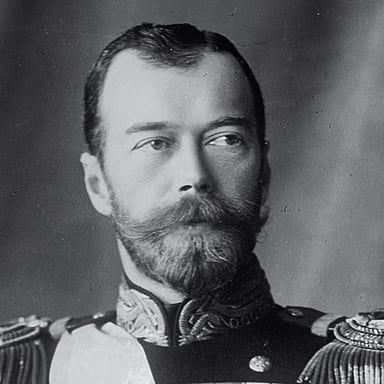
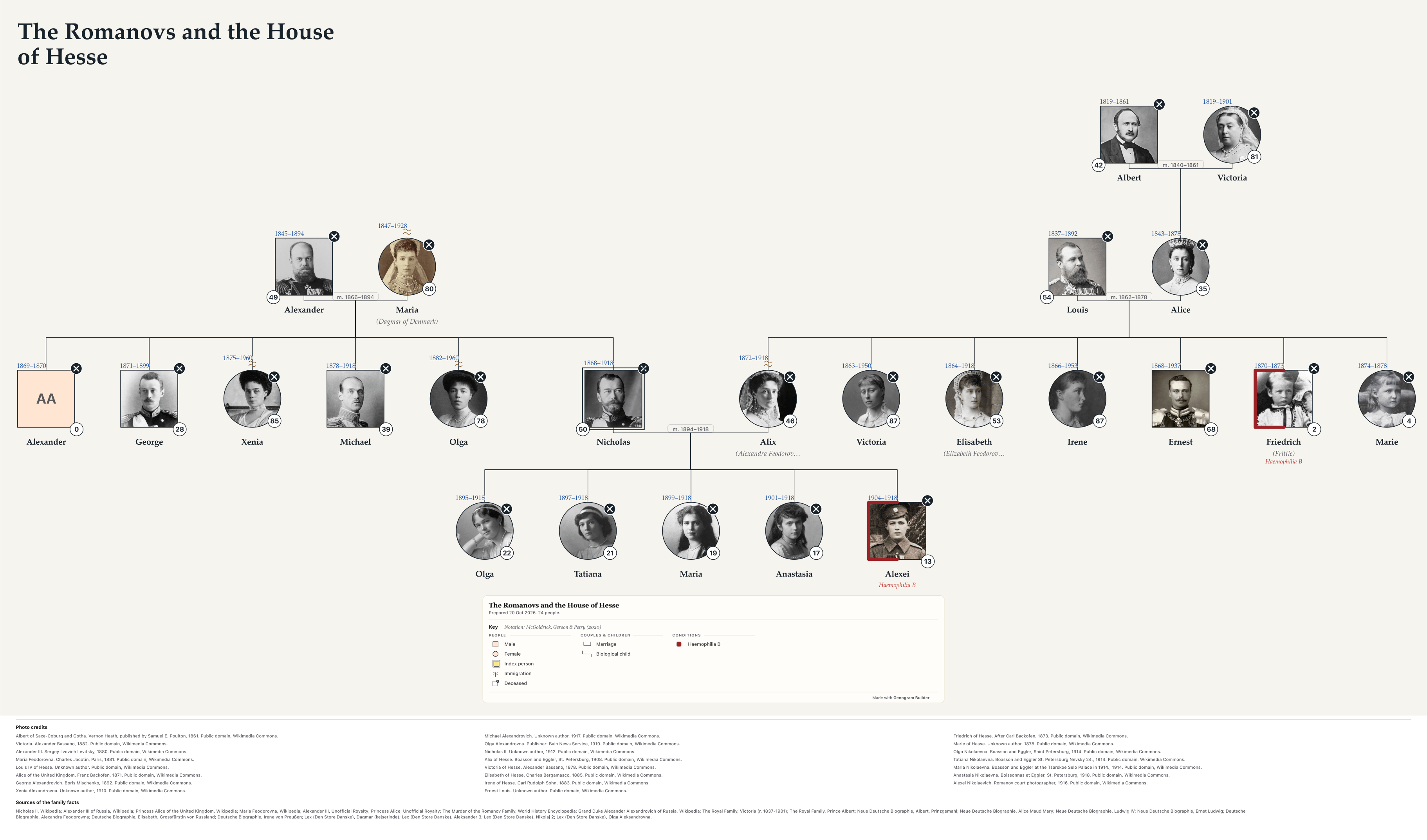
Russia: Alice's daughter Alix of Hesse (1872–1918), a carrier who took the name Alexandra Feodorovna, married Nicholas II (1868–1918) in 1894; their son Alexei Nikolaevich (1904–1918) had haemophilia B, and all three were killed by the Bolsheviks.
Spain: Beatrice's daughter Victoria Eugenie, called Ena (1887–1969), a carrier, married Alfonso XIII (1886–1941) in 1906; they later separated. Their sons Alfonso, Prince of Asturias (1907–1938), and Gonzalo (1914–1934) had haemophilia B and bled to death after car accidents.
Portrait credits for Queen Victoria and the royal disease
- Ernest I. George Dawe, 1818. Public domain, Wikimedia Commons.
- Louise of Saxe-Gotha-Altenburg. Engraving lettered with her name, Rijksmuseum. Unknown engraver, 1817. CC0, Wikimedia Commons.
- Edward (Duke of Kent). William Beechey, 1818. Public domain, Wikimedia Commons.
- Victoria of Saxe-Coburg-Saalfeld. George Dawe, 1818. Public domain, Wikimedia Commons.
- Albert of Saxe-Coburg and Gotha. Vernon Heath, published by Samuel E. Poulton, 1861. Public domain, Wikimedia Commons.
- Victoria. Alexander Bassano, 1882. Public domain, Wikimedia Commons.
- Frederick III. Reichard & Lindener, 1878. Public domain, Wikimedia Commons.
- Victoria. Thomas Heinrich Voigt, 1895. Public domain, Wikimedia Commons.
- Albert Edward. W. & D. Downey, 1900. Public domain, Wikimedia Commons.
- Alexandra of Denmark. W. & D. Downey, 1913. Public domain, Wikimedia Commons.
- Louis IV of Hesse. Unknown author. Public domain, Wikimedia Commons.
- Alice. Franz Backofen, 1871. Public domain, Wikimedia Commons.
- Alfred. Attributed to Maull and Fox, 1881. Public domain, Wikimedia Commons.
- Maria Alexandrovna. Bain News Service, publisher, 1901. Public domain, Wikimedia Commons.
- Christian of Schleswig-Holstein. Robert Jefferson Bingham : 58 Rue de Larochefoucauld, Paris, 1866. Public domain, Wikimedia Commons.
- Helena. Unknown author, 1887. Public domain, Wikimedia Commons.
- John Campbell (Duke of Argyll). Unknown author. Public domain, Wikimedia Commons.
- Louise. Vianelli Brothers, 1881. Public domain, Wikimedia Commons.
- Arthur. Alexander Bassano, 1885. Public domain, Wikimedia Commons.
- Louise Margaret of Prussia. Lafayette, 1907. Public domain, Wikimedia Commons.
- Leopold. Maull & Fox, 1883. Public domain, Wikimedia Commons.
- Helena of Waldeck-Pyrmont. Unknown author, 1882. Public domain, Wikimedia Commons.
- Henry of Battenberg. Unknown author, 1885. Public domain, Wikimedia Commons.
- Beatrice. Walery, London (fl. 1864-90), 1886. Public domain, Wikimedia Commons.
- Henry of Prussia. Unknown author, 1891. Public domain, Wikimedia Commons.
- Irene of Hesse. Carl Rudolph Sohn, 1883. Public domain, Wikimedia Commons.
- Friedrich of Hesse. After Carl Backofen, 1873. Public domain, Wikimedia Commons.
- Nicholas II. Unknown author, 1912. Public domain, Wikimedia Commons.
- Alix of Hesse. Boasson and Eggler, St. Petersburg, 1908. Public domain, Wikimedia Commons.
- Alfonso XIII. Kaulak, 1916. Public domain, Wikimedia Commons.
- Victoria Eugenie. Christian Franzen, 1922. Public domain, Wikimedia Commons.
- Waldemar of Prussia. Unknown author, 1915. Public domain, Wikimedia Commons.
- Heinrich of Prussia. Unknown author. Public domain, Wikimedia Commons.
- Alexei Nikolaevich. Romanov court photographer, 1916. Public domain, Wikimedia Commons.
- Alfonso (Prince of Asturias). Studio of Christian Franzen, 1927. Public domain, Wikimedia Commons.
- Gonzalo. Philip de László, 1927. Public domain, Wikimedia Commons.